
Solo Horizons: Redefining Scale for the Philippine AI Economy
Gobi Partners’ Solo Horizons Report 2026 examines how artificial intelligence is reshaping the country’s economy, workforce and entrepreneurial landscape. It benchmarks the Philippines against its ASEAN neighbours, China, Japan and South Korea, highlighting the gap between widespread AI adoption and the country’s readiness to build and scale AI-driven businesses. The report also explores the rise of AI-powered one-person companies, emerging investment opportunities, workforce transformation and the policy priorities needed to strengthen the Philippines’ position in the regional AI economy.
November 9, 2026
2026 report reveals Filipino knowledge workers are among the world's most active AI users, but warns that structural readiness, talent pipelines, and venture funding require urgent mobilization.
MANILA, Philippines, November 9, 2026 — Gobi Partners today released Solo Horizons: Redefining Scale in the Philippine AI Economy 2026, in collaboration with Alibaba Cloud, Gorriceta Africa Cauton & Saavedra, and Upskill Development Foundation Inc. The report was developed with the support of the Office of Senator Bam Aquino, the Department of Information and Communications Technology (DICT), the Department of Trade and Industry (DTI), the Department of Science and Technology (DOST), and the National Development Company (NDC). This report offers a comprehensive and regionally benchmarked evaluation of where the Philippines stands within the ASEAN+3 artificial intelligence landscape. While the country continues to demonstrate exceptional consumer and workforce enthusiasm for emerging technologies, the report underscores critical structural gaps in funding, infrastructure, and formal governance that must be addressed to transform widespread AI usage into enduring national capability.
The "Fast Adopter, Slow Builder" Dilemma
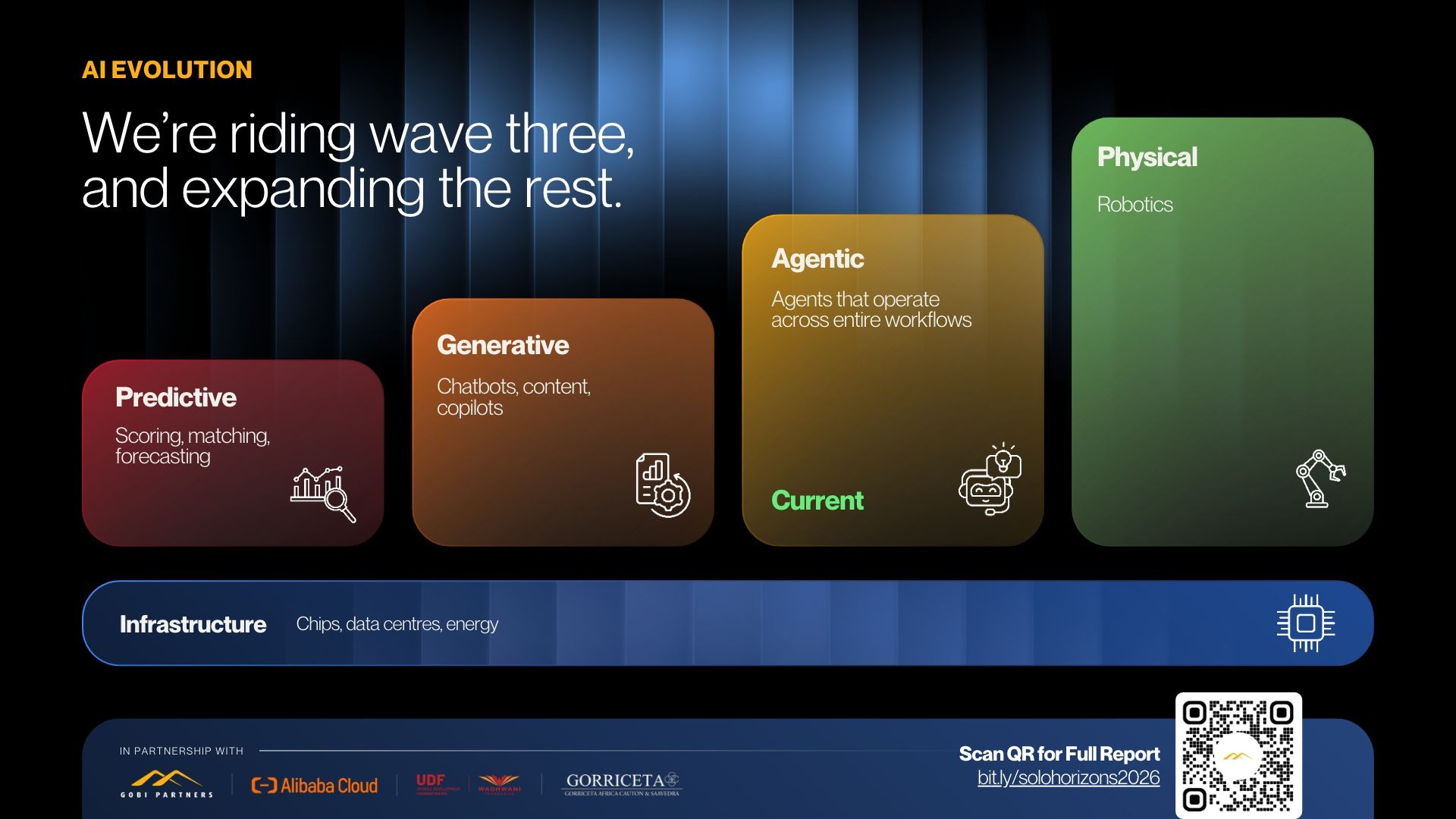
According to the report, Filipino knowledge workers are among the most enthusiastic AI adopters globally, with 86% using AI daily or routinely at work in 2024, well above the global average of 75%. By 2026, a quarter of Filipino workers qualified as "Frontier Professionals" who use AI agents for multistep work, against 16% globally.
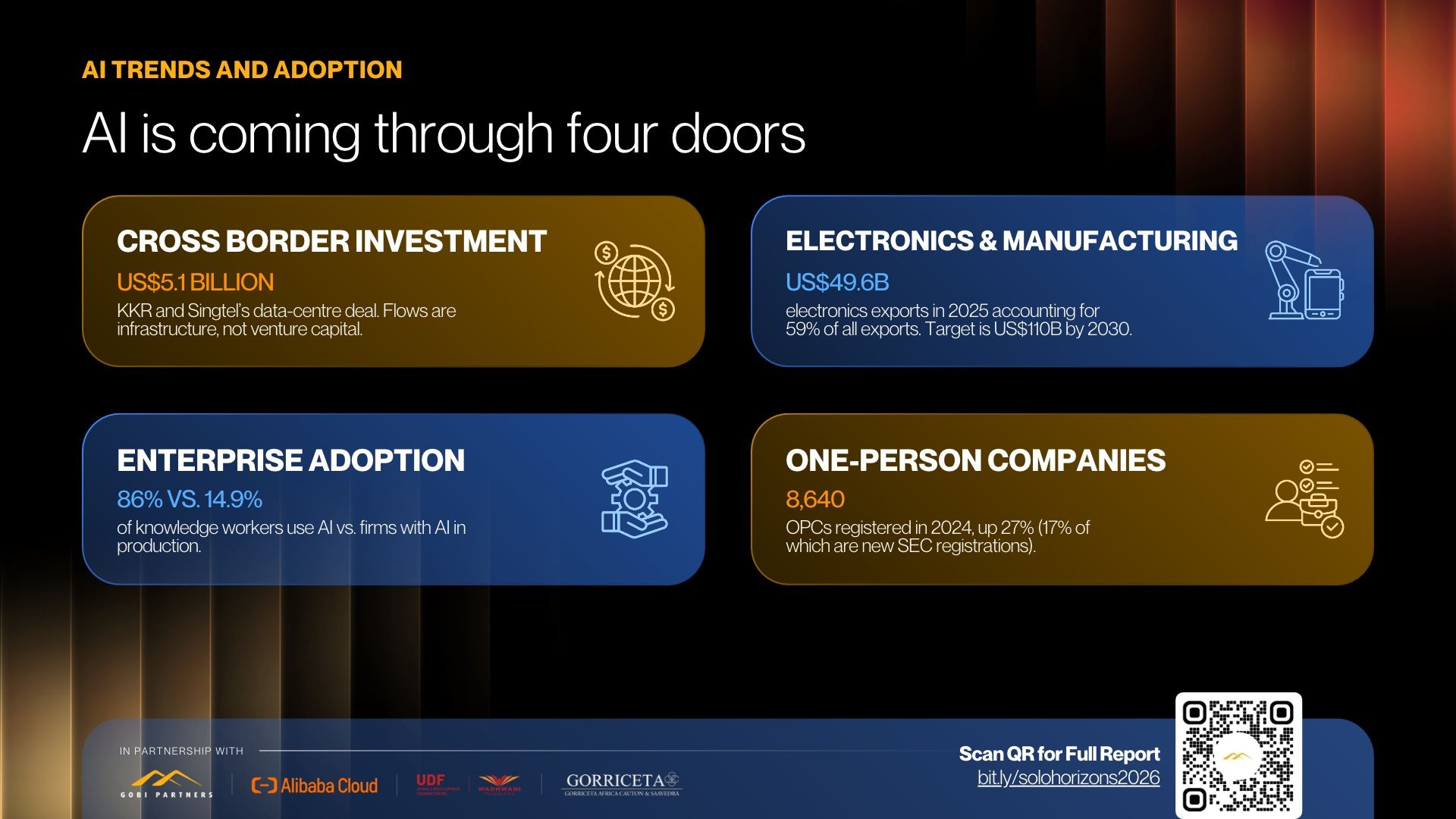
However, this high individual adoption contrasts sharply with enterprise adoption. Only 14.9% of Philippine firms use AI tools, and enterprise workloads account for just 15% to 20% of the country's AI usage. Across the working-age population, AI use stands at 20.7%, in the lower half of ASEAN+3, and the country ranks 50th of 139 economies on the WIPO Global Innovation Index (2025).
Venture Funding Headwinds in 2026
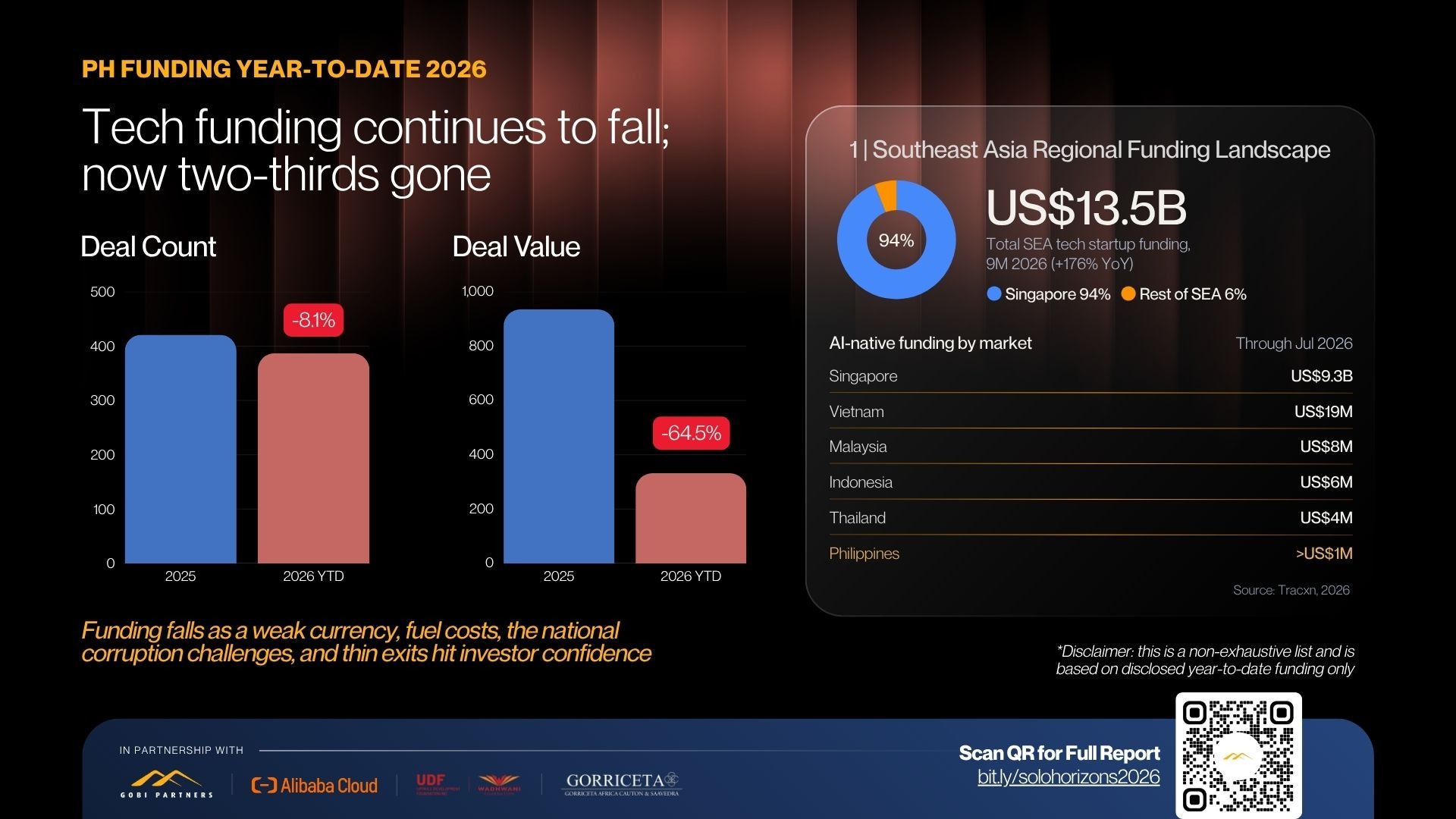
Macroeconomic pressures and shifting global investor priorities have taken a toll on the local tech ecosystem. Philippine startup and technology funding in 2026 year-to-date is down about 65% in value from 2025, while deal count fell by only about 8%. Most of the remaining capital went to growth-stage fintech companies: Series B rounds account for about three quarters of 2026 deal value and fintech for roughly 78%, while startups tagged as AI companies raised less than 1%.
Government programs now drive early-stage activity. DOST grants, technology business incubator (TBI) funding and DOST-NDC equity account for most MVP and seed-stage deals, and public funding has grown from less than 1% of total deal value in 2025 to about 9% in 2026 year-to-date, although private investors still provide most of the capital.
This cooling trend is attributed to several converging factors:
- Global Capital Reprioritization: Investor capital is increasingly concentrating in US frontier AI hubs and public offerings.
- Macroeconomic Pressures: Local public-investment delays, imported fuel shocks, and a weak Philippine Peso (PHP) exchange rate.
- Monetary Tightening: Persistent interest rate hikes by the Bangko Sentral ng Pilipinas (BSP) to stabilize inflation and currency fluctuations.
Strategic Opportunities: Manufacturing, Semiconductors, and Green Infrastructure
Despite funding and readiness hurdles, the report highlights vital areas for growth and strategic positioning:
- The Pax Silica Alignment & Advanced Manufacturing: Following the Philippines' April 2026 signing of the US-led Pax Silica Declaration, proposed industrial hubs like the 1,619-hectare economic security zone in New Clark City offer pathways into semiconductor packaging, back-end electronics manufacturing, and regional supply chain integration. Electronics already made up 58.81% of Philippine exports in 2025.
- Green Energy Data Centers: The country's data center grids have stronger solar and wind potential than Singapore's or Malaysia's, a basis for attracting the hyperscale data center investment that has so far gone to Malaysia and Thailand.
- AI-Native Lean Formation: One Person Corporations (OPCs) grew 27% in 2024, signaling fertile ground for solo founders and lean teams leveraging multi-agent AI ecosystems.
Navigating the Talent Landscape & BPO Disruption
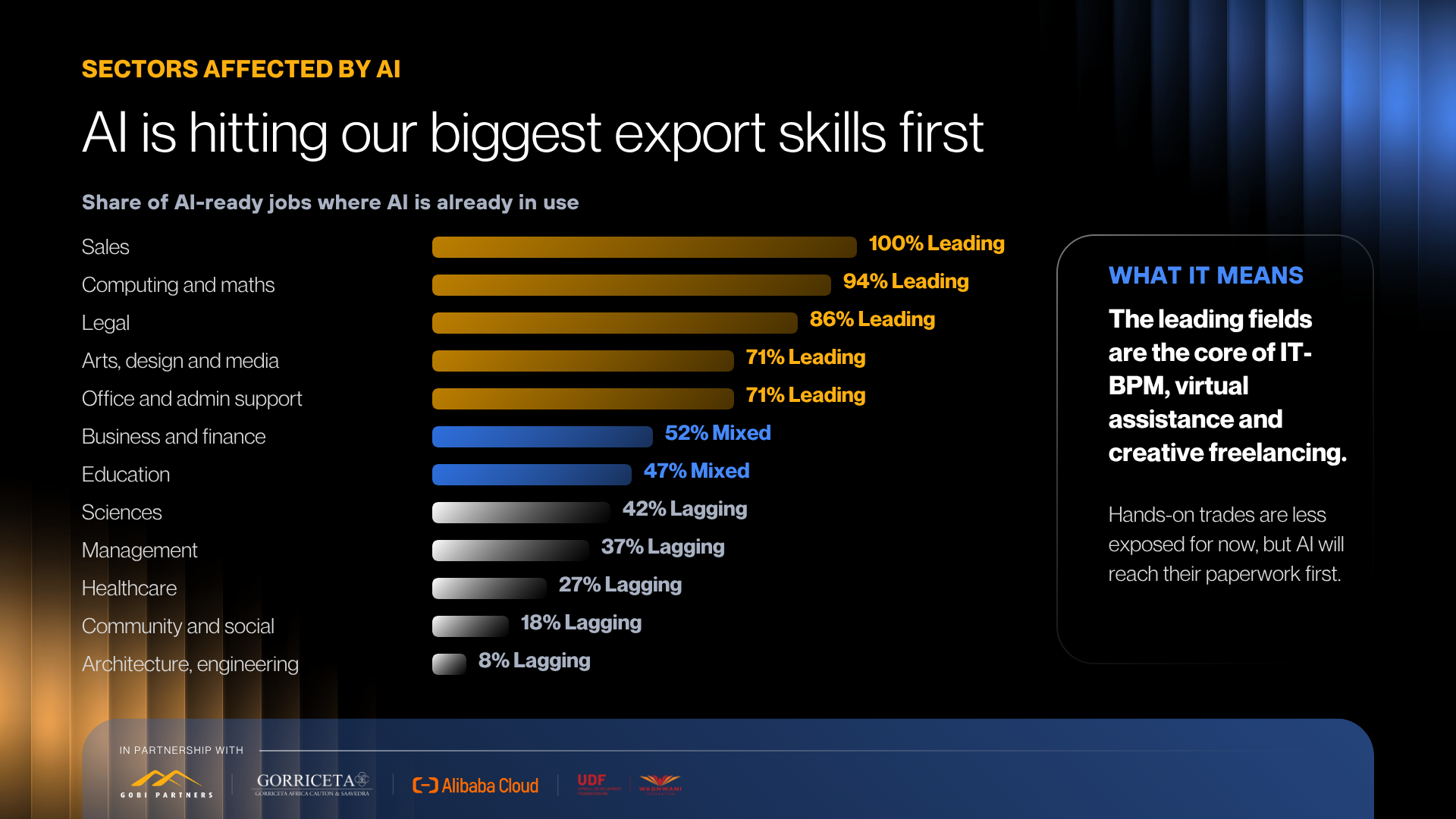
The IT-BPM sector, the backbone of the digital economy with about 1.9 million workers and over US$40 billion in revenue, remains both the country's greatest AI adoption story and its largest vulnerability. While BPO firms lead all sectors in AI tool deployment, Kearney estimated in 2023 that up to 100,000 Philippine jobs could become obsolete because of AI.
The report stresses that the country's reskilling pipeline currently trails the 2026–2027 disruption window. Targeted interventions, such as TESDA's 2026 AI micro-credential allocation and institutional upskilling roadmaps, are vital to move workers from vulnerable entry-level positions into high-demand roles, including AI engineers, data scientists and machine learning engineers, prompt and AI operations roles, and AI governance and ethics specialists. The Philippines ranks 5th of 25 outsourcing hubs on the Ataraxis Global Outsourcing AI Readiness Index, but its education pipeline remains a weak point.
Policy Recommendations
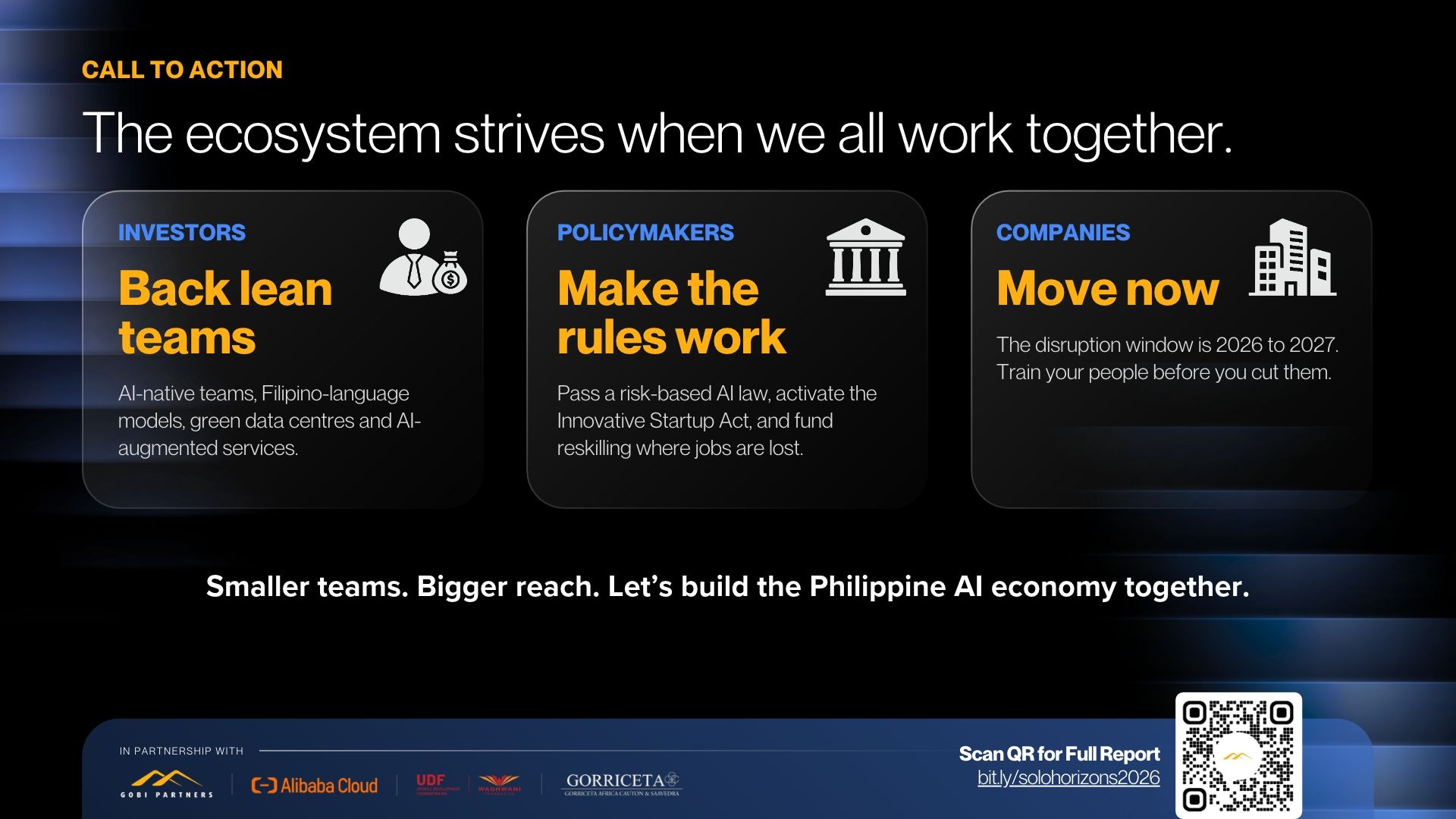
The report calls for a coordinated multi-sector approach:
- Iterative, Sector-Specific Governance: Establishing agile regulatory codes (across finance, health, and education) while consolidating pending legislation under an empowered coordinating body like the DICT. Twenty-six AI-related House bills currently await consolidation.
- Activating the Innovative Startup Act: Expanding innovation grants and startup funding to support local AI startups and solo founders.
- Enhancing Ease of Doing Business for Tech Founders: Streamlining regulatory compliance, reducing bureaucratic friction, and accelerating business registration, tax incentives, and cross-border capital flows for early-stage technology companies.
- Public-Private Collaboration: Deepening institutional coordination through frameworks like NAISR 2.0 and expanding industry sandboxes.
- Talent and Education Policy: Coordinating DepEd, CHED, TESDA, DICT, DOST and industry on AI skills, with success measured by competency and employment outcomes.
- Investment and Infrastructure Priorities: Securing renewable power, land and water for the Pax Silica zone and data centers, and pursuing hyperscale cloud commitments such as a Philippine AWS region.
The full report, Solo Horizons: Redefining Scale in the Philippine AI Economy 2026, can be read here: bit.ly/solohorizons2026
About Gobi Partners
Founded in 2002, Gobi Partners is an Asia-centric venture capital firm based in Hong Kong and Kuala Lumpur, investing in early- to growth-stage companies across East, South, and Southeast Asia. With US$2 billion in assets under management (AUM) and 18 locations across Asia, Gobi has backed over 400 companies and visionary entrepreneurs building the digital economy of tomorrow.
Website: www.gobi.vc